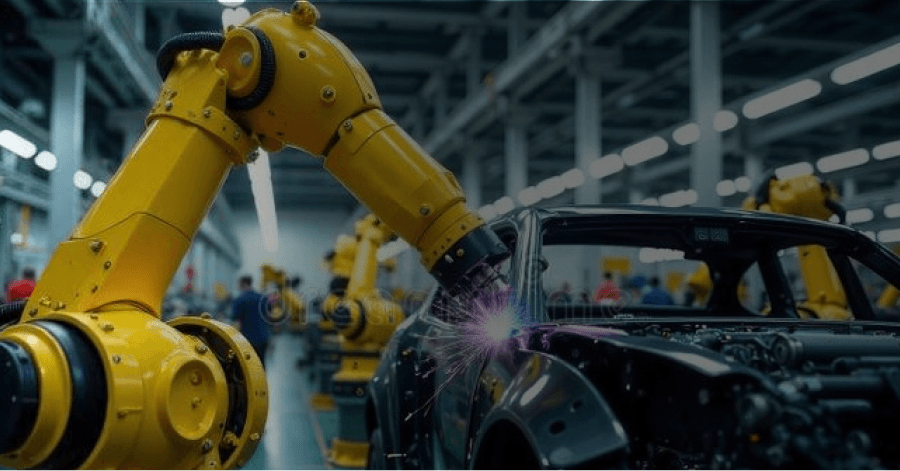
The future of mobility is no longer being written in concept notes or lab prototypes; it is being tested on roads, embedded into city systems, and scaled through industrial ecosystems. From intelligent electric vehicles and autonomous driving to urban air mobility and drone enabled logistics, smart mobility is rapidly becoming one of the defining industries of the next decade.
That shift is not only about cleaner transport; it is about how cities move people, goods, data, and capital more efficiently. Transport already accounts for 23% of global energy related CO₂ emissions, and without intervention, transport emissions could grow by 16% to 50% by 2050, making electrification and intelligent mobility a strategic economic and climate priority not just a technological one.
China’s EV Momentum Is Redefining Global Scale
China is now at the center of that transformation. According to UN Trade and Development (UNCTAD), China manufactured 58% of the world’s electric vehicles in 2023, confirming its position as the global anchor of the EV value chain and one of the most influential forces in the future of mobility.
At the same time, United Nations-linked data highlighted by UNECE shows that EV sales in China reached a 40% share of new car sales in 2023, demonstrating that China is not only producing mobility technologies at scale, but also commercializing them domestically faster than most major markets. This is what makes China’s mobility story so important, it is where industrial scale, public adoption, and policy ambition are moving in the same direction.
Guangzhou Is Emerging as a Strategic Mobility Ecosystem
What makes this especially significant is that smart mobility is no longer a single industry conversation. It now sits at the intersection of advanced manufacturing, digital infrastructure, energy systems, AI, logistics, and urban planning.
In other words, EVs are only one part of the story. The real opportunity lies in the wider system around them: batteries, charging networks, software, autonomous navigation, data platforms, fleet applications, industrial robotics, and regulatory readiness.
A recent UECN analysis also underscores how mobility innovation is increasingly tied to broader UAE–China strategic cooperation in electric and autonomous transportation, noting that bilateral trade between the two countries reached a record USD 101.8 billion in 2024 a scale of economic engagement that creates fertile ground for future mobility partnerships, market access, and co investment.
Beyond EVs: The Rise of Intelligent and Connected Mobility
This is precisely where AIM Talks China becomes more than an event, it becomes a market making platform. While Guangzhou is positioned within Tianhe CBD, one of the Greater Bay Area’s most influential economic centers, and is designed as a high impact dialogue platform that brings together global investors, policymakers, and industry leaders to explore how industries are being reshaped by innovation, sustainability, and global trade dynamics.
Set in Guangzhou’s industrial and manufacturing ecosystem, the platform is built to generate strategic insight, stakeholder access, and investment dialogue around future ready industries.
In that context, smart mobility and EVs are central to how industrial upgrading, climate transition, and capital deployment are unfolding in China today.
A Strategic Landscape for Capital and Cross Border Growth
AIM Talks China is positioned to influence this industry because it connects three things that rarely converge in one room: industrial capability, policy dialogue, and cross border investment.
It gives mobility companies exposure beyond the domestic market; investors access to real enterprise ecosystems rather than abstract trends; and it creates a platform where technology, manufacturing, infrastructure, and finance can be viewed as one integrated value chain.
For global stakeholders especially from the Middle East, the UAE, and wider emerging markets that matters. Smart mobility will not scale globally through isolated innovation alone. It will scale through partnerships that connect manufacturing strength in China with capital, logistics, infrastructure development, and international deployment opportunities abroad. AIM Talks China helps enable exactly that kind of conversation.
Positioning at the Forefront of Smart Mobility Transformation
The bigger picture is clear: the next phase of mobility will be electric, intelligent, connected, and increasingly multidimensional. Guangzhou is emerging as one of the places where that future can be seen in motion. By convening the right mix of investors, policymakers, innovators, and industrial leaders, AIM Talks China is turning that momentum into business dialogue, market opportunity, and long term strategic collaboration.
Driving the Next Era of Mobility Innovation
Explore the opportunity, connect with the ecosystem, and join the dialogue shaping the future of mobility at AIM Talks China 2026.